When it comes to drinking water, a better taste doesn’t always mean better quality. Your refrigerator’s built-in filter may improve the taste and provide convenient access to chilled water, but how much is it actually removing? For Long Island homeowners, where local water quality concerns make filtration especially important, relying on a standard refrigerator filter may leave some contaminants unaddressed.
So, the question is, how much is really enough when it comes to protecting the quality of your drinking water?
For many Long Island households, additional filtration may be beneficial. While refrigerator filters are useful for improving taste and reducing certain contaminants, Long Island’s unique groundwater conditions present challenges that basic carbon filters are not designed to address.
Here is what every Nassau and Suffolk County homeowner needs to know about how refrigerator filters work, what they may leave behind, and how upgrading to a Reverse Osmosis (RO) system can provide additional drinking-water protection.
What Do Refrigerator Water Filters Actually Do?
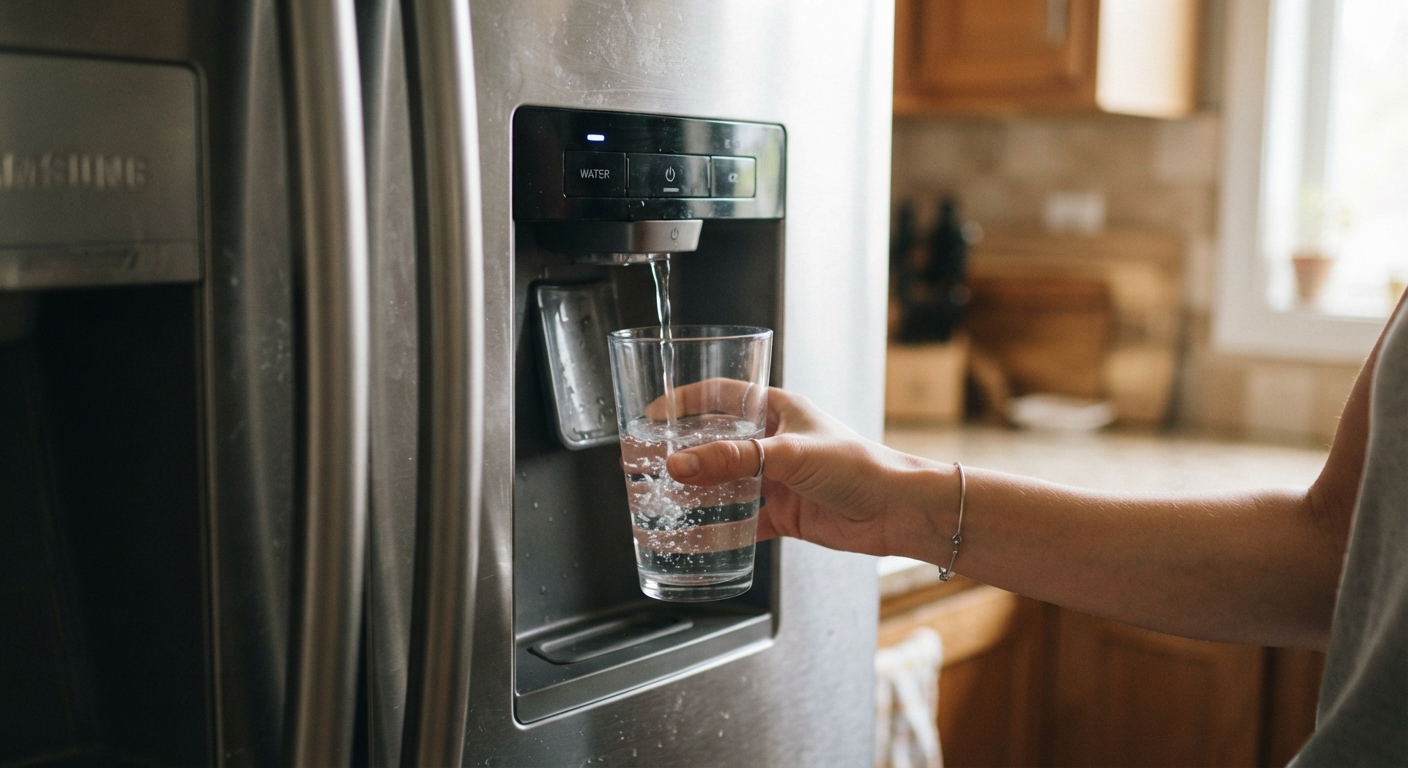
Most built-in refrigerator water filters rely on activated carbon, either granular activated carbon or carbon block media. These filters are primarily designed to improve water taste and odor by reducing chlorine and certain other contaminants.
The Strengths
Activated carbon works through a process called adsorption, in which contaminants attach to the surface of the carbon material. It can be effective at:
- Reducing Chlorine Taste and Odor
- Reducing Certain Organic Compounds
- Reducing Sediment
The Limitations
Despite improving water taste, standard refrigerator filters have limitations. Their performance depends on the specific filter model, its filtration technology, and its third-party certifications.
Micron ratings describe the size of particles a filter can capture, but they do not determine its ability to remove dissolved chemicals. For example, standard activated carbon filters generally do not remove dissolved nitrates or significantly reduce total dissolved solids, which include dissolved minerals and salts.
Additionally, refrigerator filter cartridges have a limited treatment capacity and require periodic replacement. Their ability to reduce targeted contaminants can decline as they approach their rated capacity.
To understand why these limitations matter for Long Island homeowners, it’s important to look more closely at the region’s groundwater.
The Long Island Factor: Understanding Your Groundwater
Unlike many cities that rely on surface water from reservoirs, Nassau and Suffolk Counties depend almost entirely on groundwater for their freshwater supply. Long Island’s aquifer system is replenished primarily by rainfall that filters through the island’s sandy soil.
While this natural process provides an important source of drinking water, it also makes groundwater vulnerable to contamination from sources such as fertilizers, septic systems, and historical industrial activity.
To better understand the contaminants that may affect your drinking water, explore our guide to the Five Worst Contaminants Threatening Both Private and Municipal Water on Long Island.
Refrigerator Filters vs. Reverse Osmosis (RO): The Technical Breakdown
When comparing a standard refrigerator filter with a dedicated multi-stage Reverse Osmosis (RO) system, the main difference comes down to filtration technology and the types of contaminants each system is designed to reduce.
| Feature / Capability | Standard Refrigerator Filter | Reverse Osmosis (RO) System |
| Primary Technology | Activated Carbon | Semipermeable Membrane + Multi-Stage Filtration |
| Chlorine Taste and Odor | Often reduces | Usually reduces with carbon pre/post-filters |
| Sediment Reduction | Depends on model | Depends on prefiltration |
| PFAS Reduction | Depends on certification | Can substantially reduce specific PFAS when certified |
| Nitrate Reduction | Generally not removed by standard carbon filters | Can reduce nitrates when certified for this claim |
| Heavy Metal Reduction | Depends on certification | Can reduce specific metals when certified |
| Total Dissolved Solids (TDS) | Generally limited reduction | Significantly reduces TDS |
| System Scope | Integrated Refrigerator Filtration | Dedicated Under-Sink Drinking Water System |
Note: Actual contaminant reduction varies by manufacturer, system design, certification, incoming water quality, and maintenance. Look for independently verified reduction claims for the specific contaminants you want to address.
Complete Home Protection: Pairing RO with Whole-Home Softening
While a dedicated Reverse Osmosis system treats the water you drink and cook with, point-of-use drinking filters do not address hard water throughout the rest of your home.
To address both drinking-water quality and mineral buildup, homeowners can consider pairing an under-sink RO drinking system with a whole-home water softener.
These systems serve different purposes:
- Reverse Osmosis: Reduces specific dissolved contaminants in drinking and cooking water.
- Whole-Home Water Softening: Reduces calcium and magnesium, helping prevent hard water scale throughout household plumbing and appliances.
Together, these technologies provide complementary water treatment for different household needs.
Taking Control of Your Home’s Water Quality
A built-in refrigerator filter is a helpful convenience for improving chlorine taste and odor, but relying on it as your family’s only drinking-water treatment may leave important gaps, particularly when it comes to dissolved contaminants found in groundwater.
Upgrading to a properly selected and maintained Reverse Osmosis system can significantly reduce exposure to certain dissolved contaminants, including nitrates, specific heavy metals, and certain PFAS compounds, when the system is independently certified for those reduction claims.
Combining an under-sink RO system with appropriate whole-home water softening can also help address hard water issues throughout your property, from kitchen appliances to bathroom fixtures and water heaters.
The first step is understanding what is actually in your water. Water quality varies between neighborhoods, municipal supplies, and private wells, making professional water testing an important part of choosing the right treatment solution.
Contact Simply Pure Water Filtration at (631) 750-3455 or schedule your free basic water analysis and consultation today!
Key References & External Sources
- U.S. Geological Survey (USGS): Hydrogeology and Water Quality of the Long Island Aquifer System.
- U.S. Environmental Protection Agency (EPA): Groundwater protection, drinking water standards, PFAS, and home water treatment guidance.
- EPA: Groundwater Protection, National Drinking Water Standards, PFAS in Drinking Water, and Reducing PFAS with Home Water Filters.
- National Sanitation Foundation (NSF): NSF/ANSI 53 and NSF/ANSI 58 Drinking Water Treatment Standards.
- Centers for Disease Control and Prevention (CDC): Home Water Treatment Systems and Drinking Water Quality Guidance.
About Simply PURE Water Filtration Services
Living in and serving the Long Island community, we strive to make sure everyone has access to clean, healthy water. We have the experience, knowledge, and industry-leading technology to provide clean water solutions for water impurities, contaminants, hard water, bad tasting/odors, well water, acidity & pH regulations.
Proud members of the WQA (Water Quality Association), and the EWQA (Eastern Water Quality Association), we adhere to strict guidelines and the WQA code of ethics. As a Pentair True Blue Partner and Authorized Distributor of Pentair Products, there’s nothing comparable to the performance, and efficiency of our whole house purification systems, water softeners, neutralizers, whole-house filters, and alkaline reverse osmosis systems for drinking in the convenience of your home.
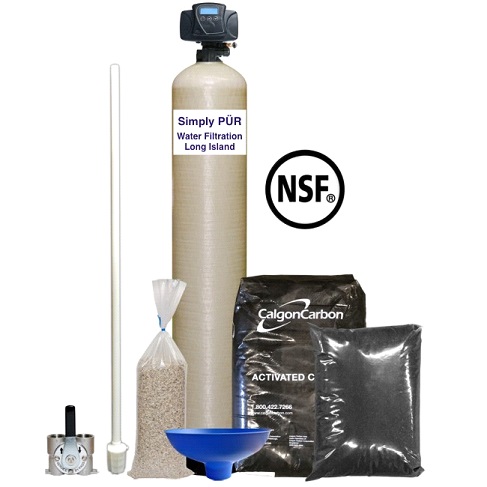
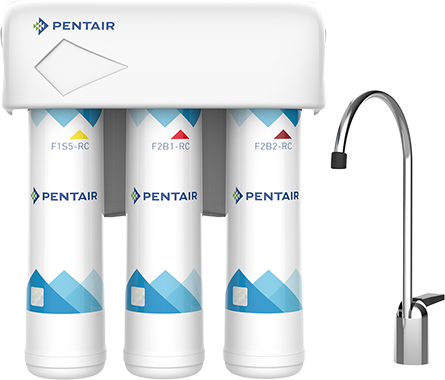
Our products are all NSF / ANSI certified, meeting the highest safety standards and quality performance. Providing our community with only the best experience of high quality water that’s Simply PURE from our family to yours!
Simply PURE utilizes accurate testing methods before and after system installation, as well as annual maintenance of all your water treatment equipment. Our Revolutionary Custom Built Water Treatment systems upon the completion of a Free In-Home Water Analysis, or an in-depth Comprehensive Water Analysis of your choice sent to our Certified Laboratory.