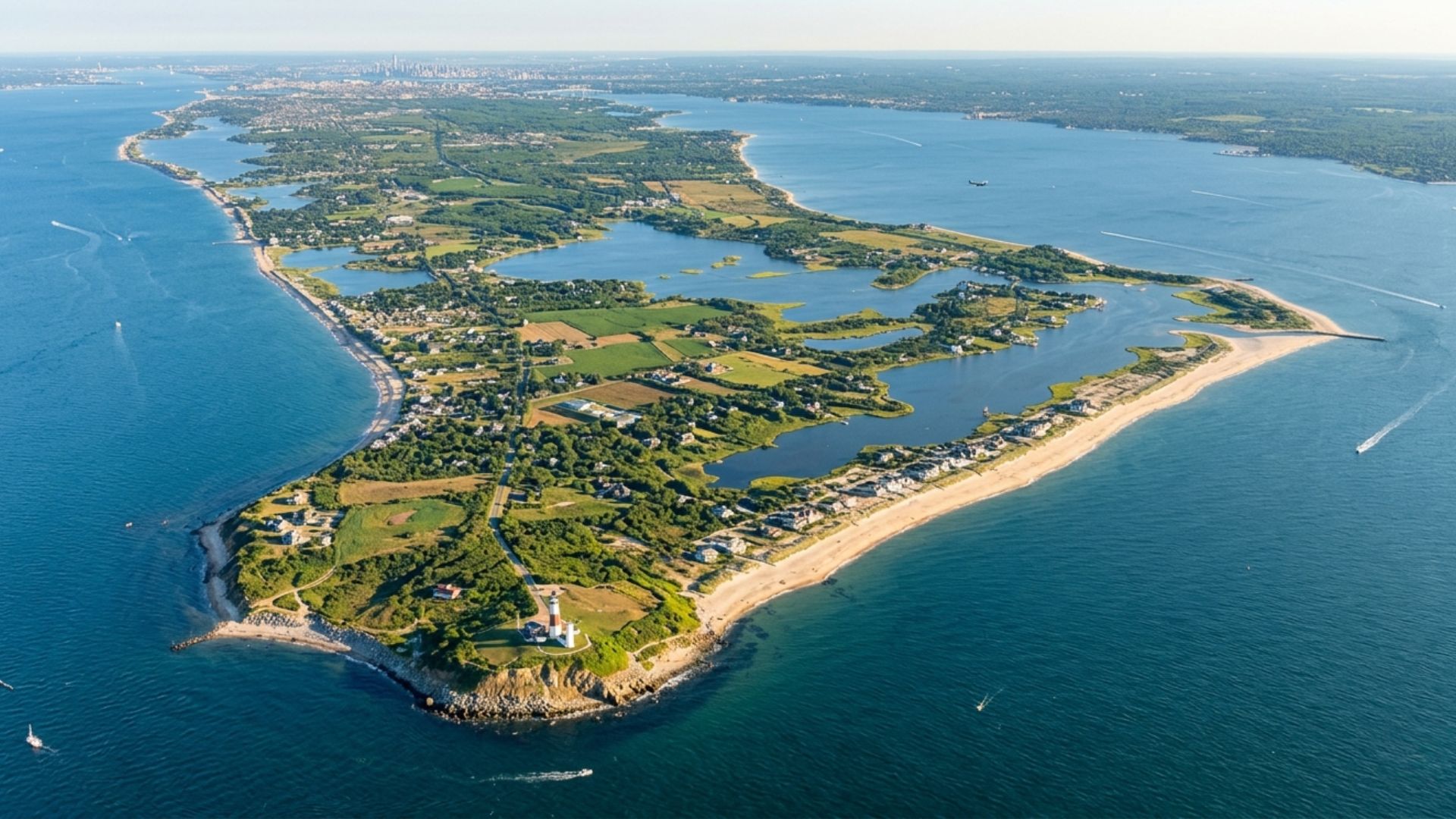
Every single drop of water you drink on Long Island comes from a finite, underground “sponge” that is currently under siege. As a Long Islander, after all, you don’t have the luxury of a backup reservoir or a mountain stream. If the water beneath your feet becomes salinized or polluted, communities could face increasingly costly and difficult water treatment challenges. For three million residents in Nassau and Suffolk, the invisible boundary between the fresh water in your glass and the salt water of the Atlantic is thinning every day. Researchers and water managers are increasingly warning that Long Island faces long-term groundwater sustainability challenges due to over-pumping, contamination, and sea-level rise. This is not just an environmental theory; it is a direct threat to one of the region’s most essential natural resources.
Long Island Geology 101: A Giant Layered Sponge
To understand the crisis, you first have to understand what’s happening beneath your lawn. Long Island sits on a “sole-source” aquifer, a federally designated status meaning the region depends almost entirely on groundwater for drinking water. Imagine a giant glass bucket filled with sand and gravel; when it rains, water fills the tiny gaps between those grains. That is our aquifer.
Long Island relies on three main aquifer layers. The Upper Glacial Aquifer is the shallowest and most vulnerable to contamination from surface runoff. Below that lies the Magothy Aquifer, the primary source of drinking water for most homes and businesses. Deepest of all is the Lloyd Aquifer, which contains older water that has been naturally filtered for thousands of years. This entire groundwater system is replenished almost exclusively through rainfall and snowmelt soaking into the ground. However, because large portions of the island have been paved over with roads, parking lots, and development, much of that water now runs off into storm drains and surrounding waterways instead of recharging the aquifer.
The Saltwater Invasion: Ocean Pushing Into Wells
Under natural conditions, Long Island’s freshwater supply acts like a pressurized barrier, pushing outward and helping keep denser seawater offshore. This creates what scientists refer to as a “freshwater lens,” where fresh groundwater floats above saltwater underground.
However, when groundwater is pumped from coastal wells faster than it can be naturally replenished, water pressure drops and saltwater can begin migrating inland. This process, known as saltwater intrusion, has already affected parts of Nassau County, Queens, and other coastal communities. Once saltwater enters freshwater aquifers, remediation becomes extremely difficult because the salinity can persist for decades or even generations.
Sea-Level Rise and Climate Pressure
Climate change is intensifying the threat of saltwater intrusion. As sea levels rise, saltwater is pushed further inland, increasing pressure on coastal aquifers and shifting the balance between freshwater and seawater.
At the same time, Long Island has experienced more frequent and intense rainfall events in recent years. While heavy storms bring large amounts of water, developed areas often cannot absorb rainfall quickly enough to recharge the aquifer effectively. Instead, stormwater becomes runoff that can carry pollutants into bays, estuaries, and shallow groundwater systems. Coastal resiliency is no longer just about preventing floods; it is also about protecting Long Island’s drinking water supply.
Pollution Moving Between Land, Aquifer, and Bays
Groundwater and coastal waters are deeply connected systems. Pollutants introduced on land can eventually travel into bays and estuaries, impacting marine ecosystems and, in some cases, threatening groundwater quality.
Nitrogen Overload
In Suffolk County and parts of Nassau County, aging septic systems and cesspools release nitrogen into shallow groundwater. This nitrogen-rich groundwater eventually flows into estuaries and bays, contributing to harmful algal blooms, declining water quality, and fish kills.
Stormwater Runoff
Along the South Shore, rainwater washes fertilizers, bacteria, and other contaminants from roads, lawns, and developed surfaces into nearby waterways. This runoff contributes to both coastal pollution and groundwater degradation.
The Sewage Paradox
Modern sewer systems can reduce nitrogen pollution entering local bays by transporting wastewater offshore for treatment and discharge. However, this process also reduces the amount of treated water that naturally recharges the aquifer system. As a result, groundwater levels can decline over time, especially in heavily populated areas.
“Water Bankruptcy”: Living Beyond Our Means
Environmental researchers increasingly warn that Long Island faces a form of “water bankruptcy,” where groundwater withdrawals and losses exceed the aquifer’s natural recharge capacity. By over-pumping coastal wells, paving over recharge zones, and allowing contaminants to enter the groundwater system, the region is placing growing stress on its limited freshwater supply.
As population growth and climate pressures continue, the aquifer’s ability to naturally recover and dilute pollutants becomes increasingly strained. Protecting groundwater quality and maintaining sustainable recharge rates are critical for the long-term health and resilience of Long Island’s water supply.
Protecting Your Water with Advanced Filtration
The presence of contaminants such as dissolved salts, nitrates, and emerging compounds like PFAS has increased interest in advanced home water treatment systems. Properly designed reverse osmosis (RO) filtration systems can significantly reduce many dissolved contaminants and improve drinking water quality.
At Simply PURE, we offer customized water purification solutions designed to address Long Island’s unique water quality challenges. Our systems help homeowners reduce exposure to contaminants and improve the quality of water used for drinking, cooking, and everyday use.
Want to learn more? Contact Simply PURE Water Filtration to schedule a water analysis and better understand what may be present in your home’s water supply.
References
Peconic Estuary Partnership. (n.d.). Long Island’s aquifer. https://www.peconicestuary.org/projects/clean-waters-2/long_islands_aquifer/
U.S. Geological Survey. (n.d.). Groundwater sustainability of the Long Island aquifer system. https://www.usgs.gov/centers/ny-water/science/groundwater-sustainability-long-island-aquifer-system
U.S. Geological Survey. (n.d.). Hydrogeologic framework and extent of saltwater intrusion in Kings, Queens, and Nassau Counties, New York. https://www.usgs.gov/publications/hydrogeologic-framework-and-extent-saltwater-intrusion-kings-queens-and-nassau
U.S. Geological Survey. (2024). Nitrogen load estimates to Long Island groundwater and surface waters. https://pubs.usgs.gov/publication/sir20245047
U.S. Geological Survey. (n.d.). Long Island groundwater sustainability studies. https://www.usgs.gov/centers/ny-water/science/ny-gw-li-sustainability
About Simply PURE Water Filtration Services
Living in and serving the Long Island community, we strive to make sure everyone has access to clean, healthy water. We have the experience, knowledge, and industry-leading technology to provide clean water solutions for water impurities, contaminants, hard water, bad tasting/odors, well water, acidity & pH regulations.
Proud members of the WQA (Water Quality Association), and the EWQA (Eastern Water Quality Association), we adhere to strict guidelines and the WQA code of ethics. As a Pentair True Blue Partner and Authorized Distributor of Pentair Products, there’s nothing comparable to the performance, and efficiency of our whole house purification systems, water softeners, neutralizers, whole-house filters, and alkaline reverse osmosis systems for drinking in the convenience of your home.
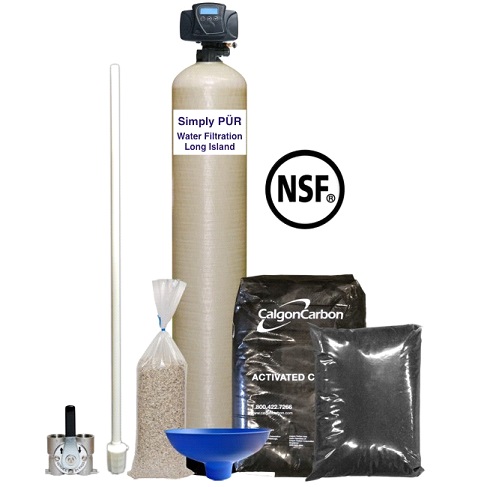
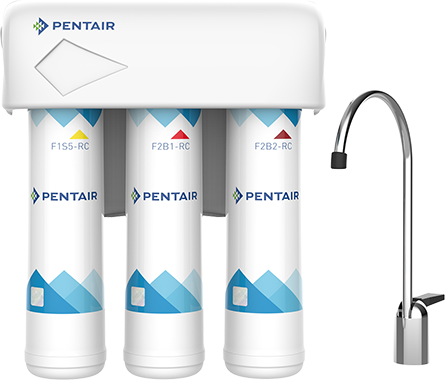
Our products are all NSF / ANSI certified, meeting the highest safety standards and quality performance. Providing our community with only the best experience of high quality water that’s Simply PURE from our family to yours!
Simply PURE utilizes accurate testing methods before and after system installation, as well as annual maintenance of all your water treatment equipment. Our Revolutionary Custom Built Water Treatment systems upon the completion of a Free In-Home Water Analysis, or an in-depth Comprehensive Water Analysis of your choice sent to our Certified Laboratory.