Living on Long Island means relying entirely on a single-source aquifer system for our drinking water (U.S. Geological Survey [USGS], 2019). Every glass poured comes from the ground directly beneath us. While local water districts treat this supply diligently, our unique sandy soil allows surface contaminants to migrate into the groundwater over time, and modern environmental pressures that standard municipal filters struggle to clear completely.
We’ve previously covered the mechanics of hard water minerals in our regional guide on Long Island’s hard water problem and the need for water softening systems. However, safeguarding your kitchen tap from complex, microscopic chemicals requires an advanced filtration strategy.
The Reality of a “Single-Source” Aquifer
Decades of industrial manufacturing, residential development, and agricultural runoff have left a persistent legacy in our groundwater. Environmental advocates continuously track several complex contaminants that impact the region:
- PFAS/PFOA (“Forever Chemicals”): Used historically in firefighting foams and consumer goods, these synthetic compounds do not break down naturally and leach deeply into groundwater (Suffolk County Water Authority [SCWA], 2025). Long-term exposure is linked to various chronic health issues.
- Nitrates: Sourced primarily from lawn fertilizers and aging septic systems, elevated nitrogen plumes remain a critical management issue for local water supplies, particularly across the East End (New York State Department of Health [NYSDOH], 2020).
While major utilities invest heavily in massive granular activated carbon treatment infrastructure to meet strict state and federal limits, localized distribution lines and private configurations can still vary (WSHU, 2025).
Why Standard Retail Filters Fall Short
When facing these concerns, many homeowners try basic pitcher or refrigerator filters. These systems typically rely on simple granular carbon. While excellent for removing aesthetic chlorine smells and tastes, their physical structure is like a wide net, allowing microscopic chemical molecules to easily slip right through the mesh.
To trap industrial byproducts, heavy metals, and dissolved chemical compounds, you need a physical barrier tight enough to stop contaminants at a molecular level.
The Science of Multi-Stage Reverse Osmosis (RO)
Reverse Osmosis (RO) systems solve this by forcing pressurized tap water through a semi-permeable membrane. To put the filtration power in perspective:
- A single strand of human hair is approximately 70 microns wide.
- Standard carbon block filters trap particles down to 1 to 5 microns.
- A high-grade RO membrane filters down to an astonishing 0.0001 microns.

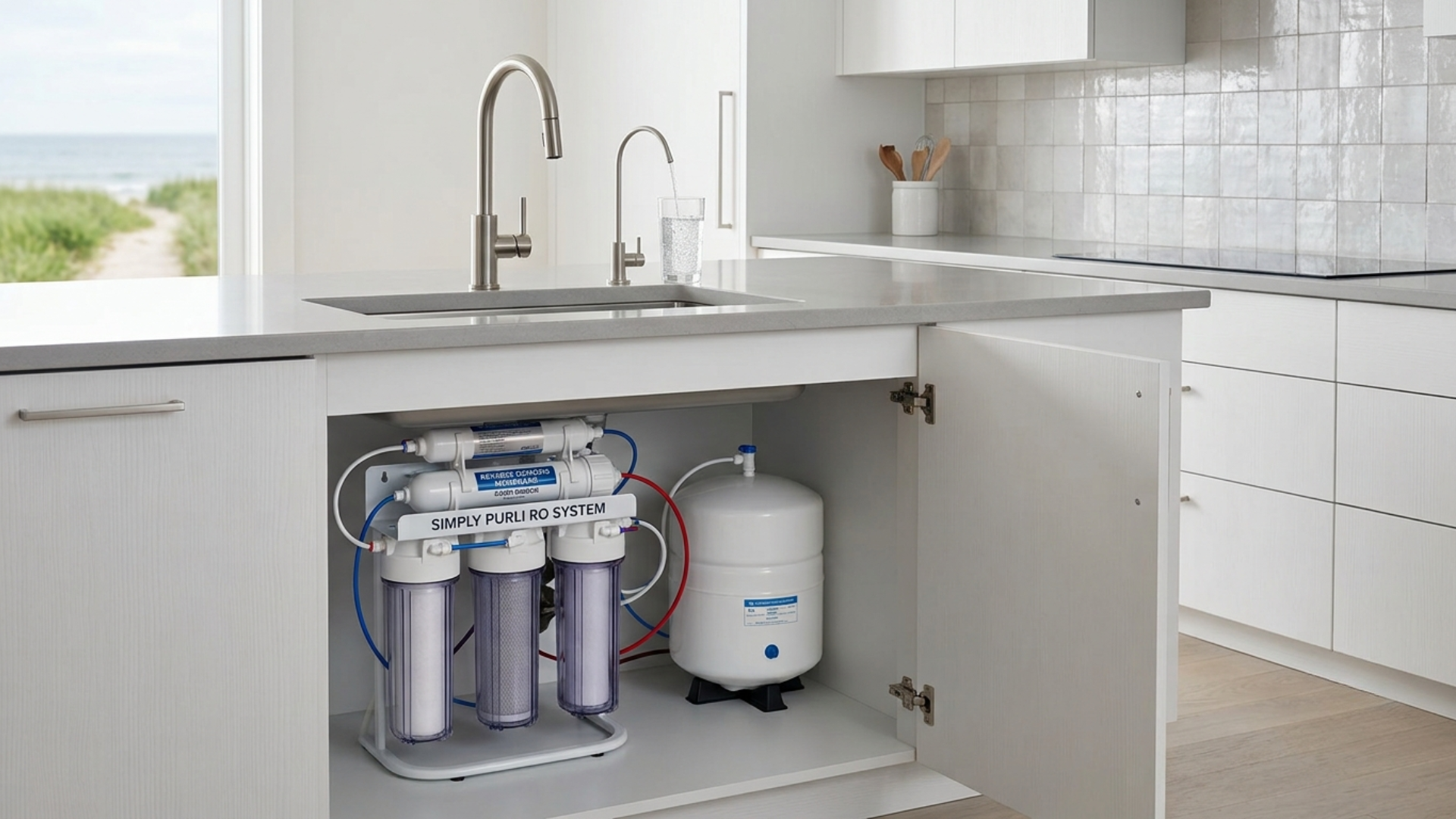
During this multi-stage process, pure water molecules pass through the membrane to a dedicated storage tank, while rejected contaminants, including dissolved solids, heavy metals, nitrates, and PFAS residues, are safely flushed away. The water receives a final carbon polish right before exiting a dedicated kitchen tap, providing a crisp, pure taste.
Designing a Complete Home Water Strategy
To address the full spectrum of water issues, it also helps to look at a comprehensive, dual-system approach. A reverse osmosis system focuses explicitly on purifying what you consume, but combining it with a whole-home water softening system provides complete protection for your property and household routines.
The 5 Main Benefits of a Whole-Home Water Softener
Unlike point-of-use systems, a whole-home water softener treats water at its entry point, offering five comprehensive advantages:
- Extends Appliance Lifespans: Eliminates the hard calcium and magnesium minerals that form crusty scale buildup inside water heaters, washing machines, and dishwashers, keeping them working efficiently.
- Relieves Skin and Hair Dryness: Hard water strips away natural oils and leaves soap residue behind. Softened water rinses away completely, keeping skin hydrated and hair soft.
- Brighter, Softer Laundry: Minerals trap soap inside fabric fibers, leading to stiff, dingy clothing. Soft water dissolves detergents completely to keep fabrics bright and plush.
- Spotless Surfaces: Eliminates the white, chalky film and water spots left behind on glassware, silverware, and shower doors, reducing cleaning time.
- Long-Term Utility Savings: Clear heating elements allow water heaters to operate with optimal energy efficiency, reducing monthly energy bills.
Why Summer Is a Great Time to Install Both Systems
Summer is the ideal season to introduce a whole-home water softener to your property for several practical reasons:
- Peak Water Consumption: Household water usage spikes dramatically during the summer due to extra showers, frequent laundry cycles, and outdoor tasks. Installing the system now stops mineral scale right when your plumbing works the hardest.
- Simpler Installation Conditions: Setting up a whole-home system requires shutting off the main water line briefly. Warm summer weather makes these logistics straightforward, with zero risk of cold-weather pipe issues or delays.
- Proactive Fall Preparation: Upgrading your plumbing infrastructure during the summer ensures your water heater, appliances, and pipes are fully optimized and scale-free before the heavy demands of the autumn and winter holiday seasons arrive.
By pairing the two solutions, the water softener acts as a protective shield, preventing hard mineral scale from fouling the delicate RO membrane, significantly extending the lifespan and efficiency of your drinking water system. Implementing an under-sink RO system alongside a whole-home softening system removes the guesswork, transforming your tap into a definitive source of purity for cooking, drinking, and true peace of mind.
Ready to move forward? Contact us for a free consultation today.
References
Citizens Campaign for the Environment. (2026). What’s new at CCE: PFAS and produce. https://citizenscampaign.squarespace.com/whats-new-at-cce?category=Highlights+%26+Happenings
New York State Department of Health. (2020). Suffolk County Water Authority – Source water assessment summary report. https://health.ny.gov/environmental/water/drinking/nyc_nassau_county_feasibility_study/Suffolk%20Co.%202020%20Drinking%20Water%20Quality%20Report.pdf
Suffolk County Water Authority. (2025, June 10). Suffolk County Water Authority achieves full compliance with federal PFAS standards six years early. https://www.scwa.com/suffolk-county-water-authority-achieves-full-compliance-with-federal-pfas-standards-six-years-early/
U.S. Geological Survey. (2019). Water for Long Island: Now and for the future (Fact Sheet 2019-3052). https://pubs.usgs.gov/fs/2019/3052/fs20193052.pdf
WSHU. (2025, June 12). Suffolk County Water Authority reaches PFAS cleanup goal 6 years early. https://www.wshu.org/long-island-news/2025-06-12/suffolk-county-water-authority-pfas-cleanup
About Simply PURE Water Filtration Services
Living in and serving the Long Island community, we strive to make sure everyone has access to clean, healthy water. We have the experience, knowledge, and industry-leading technology to provide clean water solutions for water impurities, contaminants, hard water, bad tasting/odors, well water, acidity & pH regulations.
Proud members of the WQA (Water Quality Association), and the EWQA (Eastern Water Quality Association), we adhere to strict guidelines and the WQA code of ethics. As a Pentair True Blue Partner and Authorized Distributor of Pentair Products, there’s nothing comparable to the performance, and efficiency of our whole house purification systems, water softeners, neutralizers, whole-house filters, and alkaline reverse osmosis systems for drinking in the convenience of your home.
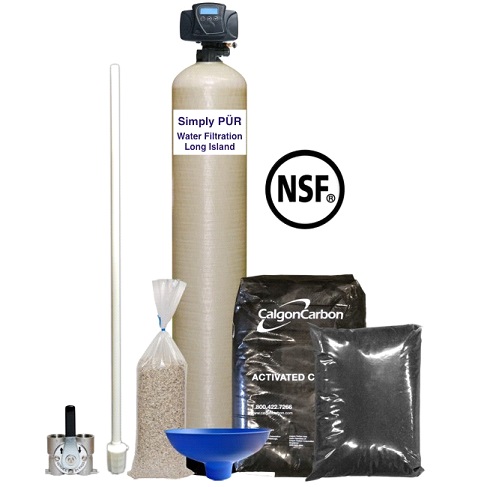
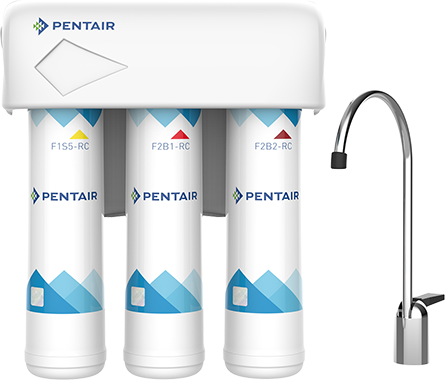
Our products are all NSF / ANSI certified, meeting the highest safety standards and quality performance. Providing our community with only the best experience of high quality water that’s Simply PURE from our family to yours!
Simply PURE utilizes accurate testing methods before and after system installation, as well as annual maintenance of all your water treatment equipment. Our Revolutionary Custom Built Water Treatment systems upon the completion of a Free In-Home Water Analysis, or an in-depth Comprehensive Water Analysis of your choice sent to our Certified Laboratory.